How to Become a Certified Nursing Assistant in NJ
July 17, 2025
School Nurse Requirements: What You Need to Know
October 16, 2025
Occupational Therapy is a form of therapy that addresses the physical, cognitive, and psychological aspects of daily living. According to the American Occupational Therapy Association (AOTA), school-based occupational therapists supports students’ academic success and social participation by integrating meaningful activities into all aspects of the school day including recess, classroom learning, and cafeteria routines. If you’ve ever witnessed a student struggling to button their coat or avoid writing assignments because gripping a pencil is tough for them, these are the types of challenges school-based occupational therapists (OTs) tackle every day. School-based Occupational Therapists in New York and New Jersey are crucial members of a student’s IEP team, helping them overcome challenges they face that impact their ability to learn. Occupational therapists in a school setting help with more than just handwriting, they address fine motor skills, sensory needs, and classroom adaptions, ensuring that every student can thrive in their learning environment.
The Role of a School-Based Occupational Therapist in New York
A school-based OT in the New York school system focuses on supporting students’ ability to participate fully and successfully in their learning environments. This means that the OT’s work is directly tied to a student’s ability to access and succeed in school, not just general life skills.
Some responsibilities of a school-based occupational therapist includes:
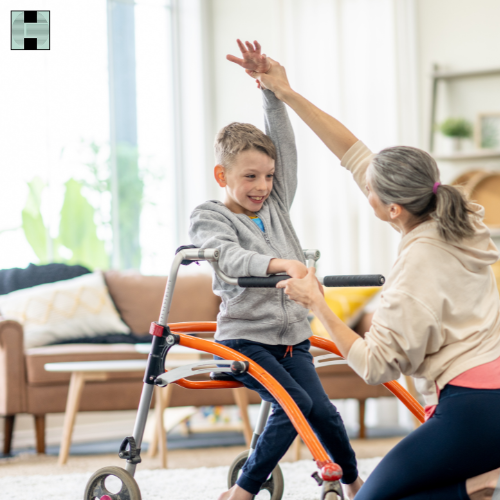
- Supporting fine and gross motor skills: Assisting students with fine motor skills by doing tasks such as holding a pencil, using scissors, or using a keyboard. They will also assist with gross motor skills by focusing on a child’s ability to coordinate, balance, move, and control their body which in turn results in enhancing their independence and participation.
- Sensory regulation: Helping children with sensory processing difficulties (overload or attention challenges) that are typically seen in autistic students or those with ADHD. However, it can also occur in students without any diagnoses. OTs will focus on modifications and accommodations in classroom environments.
- Self-care tasks: Teaching kids self-care tasks such as dressing (like zipping or buttoning jackets), developing fine motor skills for eating (using utensils or opening containers), or how to manage personal hygiene throughout the school day.
- Classroom participation: Adapting spaces or materials to make the learning environment inclusive so all students can engage in lessons and group activities.
- Assistive technology: Recommending and training on adaptive tools to help students complete schoolwork more independently.
How is School-Based Occupational Therapy in NY Different from Clinic Occupational Therapy?
Many NY parents may be wondering if school-based OT is the same as private OT therapy sessions. The short answer to this question is no, it is not the same. Here is a quick summary of the differences between school-based OT in NY and private OT therapy sessions:
- School-Based Occupational Therapy: Focuses on skills needed to succeed in a school setting. For example: writing, classroom participation, and daily school activities.
- Clinic Occupational Therapy: Often addresses a broader range of life skills, feeding therapy, and medical needs. Clinic OT may also involve insurance coverage.
However, it is not uncommon for NY families to use both school OT and private OT for a well-rounded support plan for their children.
Signs a Student in NY Might Need School OT
Teachers, parents, and educators may refer students for OT services when they notice:
- Challenges with gripping pencils, pens, cutting, or using small classroom objects
- Sensory challenges like covering ears, fidgeting excessively, or avoiding specific textures
- Struggles with self-care tasks such as buttoning a jacket, opening containers or snack bags
- Frequent meltdowns or attention difficulties related to sensory overload
- Difficulty keeping up with classroom routines or organizing materials
If a student is facing a challenge like those just mentioned, it may be time to request an OT evaluation through the Child Study Team which is a common practice in NY schools.
Why NY School Districts Partner with Horizon Healthcare Staffing
As the demand for allied health professionals like occupational therapists in NY grows, finding qualified school-based OTs in NY will be tough. This is where Horizon Healthcare Staffing steps in. We specialize in connecting NY schools with qualified professionals to place licensed occupational therapists (OTs) and certified occupational therapy assistants (COTAs). Whether your district needs long-term, short-term, or per diem OT staffing, we have a vetted network of highly quality professionals ready to step in.
Final Thoughts
As student needs become more complex, school districts in NY will face the increased demand of special services including occupational therapy. The role of a school-based occupational therapist in New York is becoming more essential than ever. As I mentioned earlier, the demand for school-based OTs in New York is projected to see an 11% growth increase. From fine motor support to sensory regulation, self-care, and inclusive participation, OTs aren’t just helping individual students, they’re strengthening the learning environment as a whole. At Horizon Healthcare Staffing, we understand the challenges NY districts face and we’re here to help relieve those challenges. Whether your school district needs full-time, part-time, or help scaling your OT services across multiple schools, our team is ready to help you. Let’s work together to ensure that every student gets the fair chance to fully engage throughout their school day and get access to the support they need in order to succeed.